Questions and answers
How can I prevent water damage in my basement?
Start with simple checks. Test your sump pump each spring by pouring water into the pit. Clean gutters and aim downspouts away from the house. Seal gaps where pipes enter the wall. Before deep frost, drain outdoor faucets. A battery backup for the pump helps when storms knock out power. These steps lower the risk, but they cannot remove it.
How soon should I act after finding water in my home?
Sooner is better. Moisture spreads into walls and floors, and mold can start growing within a couple of days. Stop the source if you safely can, and stay out of standing water if power may be on. Then request a callback to check provider availability. Many providers can respond quickly, though timing depends on the provider.
Can I dry out water damage myself?
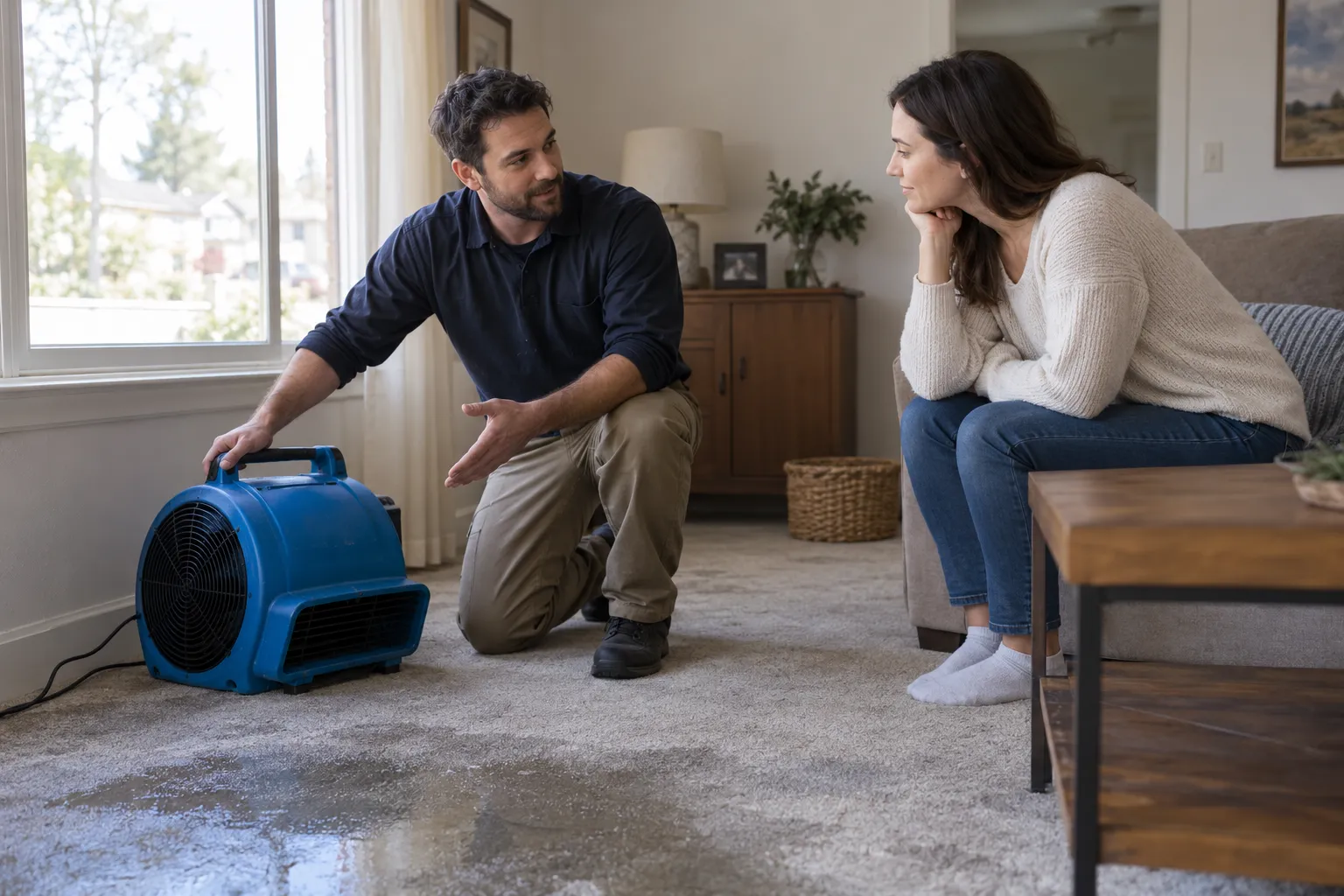
A small spill on a hard floor, yes. Larger jobs are harder. Water in walls, soaked insulation, storm water or sewage all call for a professional. Box fans and towels often leave hidden moisture behind, and that can lead to mold and warped floors. A provider uses meters to find wet spots you cannot see.
How much does water damage restoration usually cost?
Costs vary by job. In the U.S., a small, contained leak may run a few hundred to a couple thousand dollars. Larger jobs that need drying equipment often reach several thousand. Severe flooding costs more. Size, water type and materials all matter. Ask any provider for a written quote that lists what is included before work begins.
Will my homeowners insurance cover the damage?
Some policies may cover sudden damage, such as a burst pipe. Slow leaks, seepage and flood water often need separate coverage. Read your policy or ask your agent before you decide. Providers can often help document the damage with photos and moisture readings, which may make a claim easier to explain.
What is the difference between water extraction and structural drying?
Extraction comes first. It removes standing water with pumps and vacuums. Structural drying comes next. It pulls leftover moisture out of framing, subfloors and drywall using air movers and dehumidifiers. Skipping the second step is a common mistake, because a surface that looks dry can still hold water inside.
How long does drying take, and how disruptive is it?
Many jobs take several days, though it depends on how wet the home got and the weather. Equipment is loud and runs for long stretches. Tell the provider about school, work and pets. Many can plan visits around your routine and set up equipment to leave you the rooms you use most.
How does Charlotteaids Restoration work, and is there any obligation?
Charlotteaids Restoration is a referral service. We do not do the repair work. You share what happened, and we connect you with an independent provider in our network. You can compare options and ask questions first. Requesting an estimate carries no obligation, and you decide whether to hire the provider.