Need flooded basement cleanup in Indianapolis?
Questions about a wet home? Request a callback to check provider availability, or send a request and a local provider in our network will follow up.
No obligation
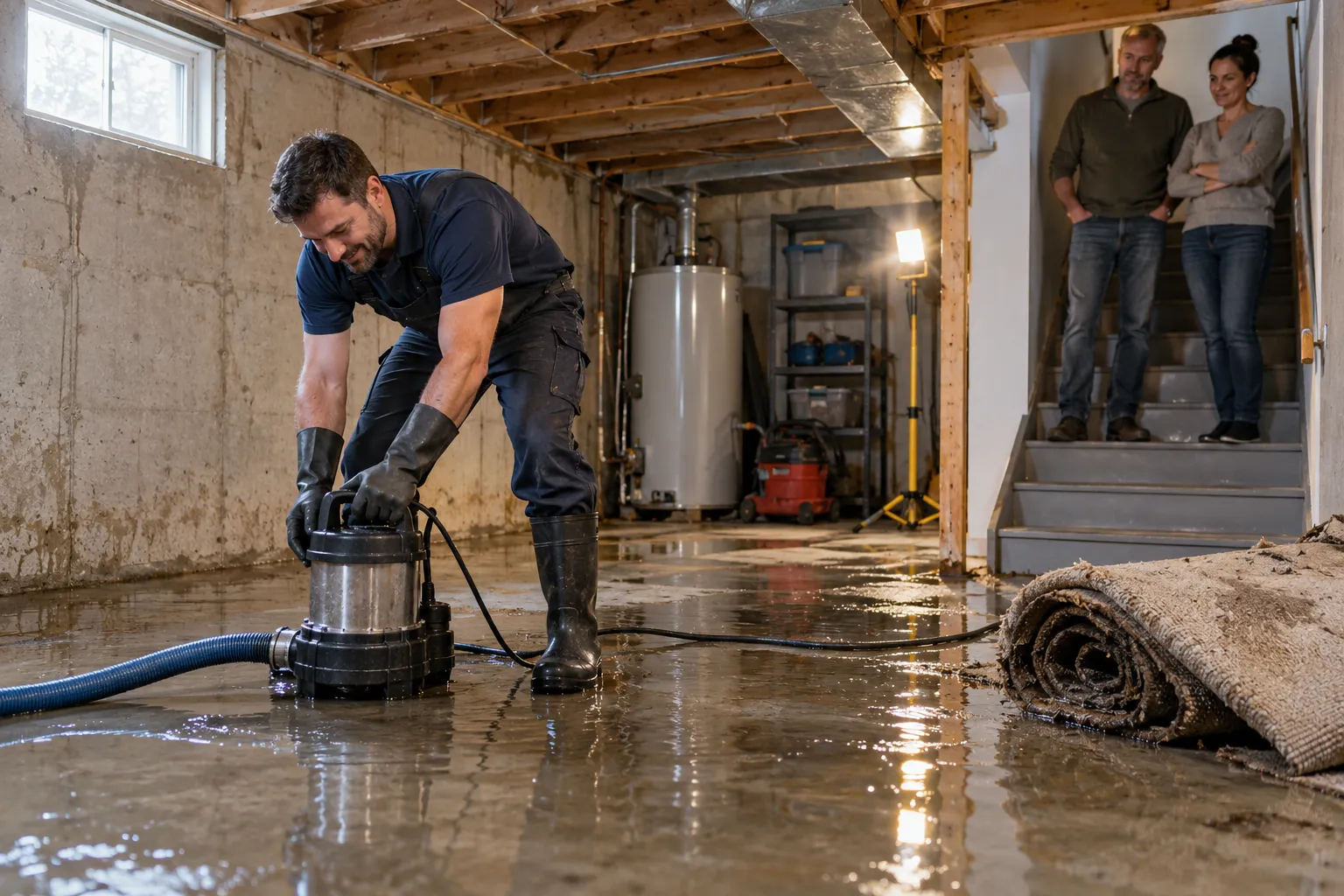
Finding water in your basement is stressful. You may not know what is safe, what is urgent, or who to trust. Charlotteaids Restoration is a referral service. We do not do the cleanup. We help you understand your options first, so you can decide with a clear head.
When you are ready, we connect you with an independent provider in our network who serves Indianapolis and the Greater Indianapolis area. Providers handle pumping, removal of soaked materials, cleaning and drying. Many can respond quickly, but availability varies. Request a callback to check provider availability, or request an estimate with no obligation.
A flooded basement is upsetting. Take a breath. You do not need to fix everything at once. You just need to know what is safe, what is urgent, and who can help.
This page walks through the steps in the order that matters most. Options before action.
Water and electricity are a dangerous mix. If water has reached outlets, cords or the electrical panel, do not walk in. Leave the shutoff to a licensed electrician or your utility. If you smell gas, go outside and contact your gas company.
Floodwater can carry germs, especially when it comes from a sewer line or from outdoors. Keep children and pets upstairs. If you must go down once the power is safely off, wear rubber boots and gloves. Skip the household vacuum on wet floors.
The source shapes the cleanup, the price and any insurance questions. Clean water from a broken pipe is handled differently than sewage or storm runoff.
Full basements with sump pumps are common here, and so are frame houses many decades old. These are the usual suspects:
If a pipe is the cause, shut off the main water valve. If rain is the cause, there is little to do but wait and stay safe. Take a few photos of the water line and damaged items. They help later.
Wet materials do not stay put. Water wicks into drywall, wood framing and insulation. Carpet and padding soak it up like a sponge. In warm, humid weather, mold can begin to grow within a couple of days.
The longer things stay wet, the more has to be removed instead of dried. Many providers can respond quickly. Request a callback to check provider availability in your area.
Every home is different. Most jobs follow the same basic path.
Providers use pumps and strong extraction tools. When the soil outside is soaked, they often remove water in stages so walls and floors are not stressed.
Soaked carpet, padding, insulation and low drywall are often cut out and hauled away. Wet porous items hold germs and moisture, so keeping them can cause bigger problems later.
Hard surfaces are cleaned and treated. After a sewage backup, this step is more thorough, and providers may use protective gear and special disposal.
Fans and dehumidifiers dry what remains. Providers use meters to confirm that framing and concrete are dry before anything is rebuilt.
An unfinished basement with a concrete floor is often simpler. Water comes out, the floor is cleaned and dried, and the job moves fast.
A finished basement has more hiding places for moisture. Carpet, trim, drywall and insulation can all hold water behind the surface. Providers may open small sections of wall to check. Ask what they plan to open and why.
Sort things into three piles: keep, clean, and let go. Hard items like metal tools and plastic bins can often be cleaned. Soaked cardboard, mattresses and upholstered furniture are harder to save.
Set aside photos, papers and keepsakes in a dry spot. Some providers can help with careful drying or cleaning of special items. Make a list with photos before anything is thrown out, since your insurer may ask for it.
Once the basement is dry, you can plan repairs. That may mean new drywall, flooring or paint. Some providers handle rebuilding, and others only handle the cleanup. Ask which applies.
It is also a good time to look at the cause. A sump pump with a battery backup, clear window wells and downspouts that point away from the house can lower the odds of a repeat.
A busy household still has school runs, work calls and meals. Tell the provider about your schedule, noise limits and pets. Ask if work can be planned around your day, and which spaces you can still use.
Ask how long equipment will run. Dehumidifiers and fans are loud, so plan where everyone will sleep and work.
Some policies may cover sudden water damage, but coverage varies, and flood or sewer backup often needs extra coverage. Check your policy and talk with your insurer. Providers can often help document damage for a claim.
A short list keeps you in control:
Calm, then call. Request a callback to talk through your situation and check provider availability.
Pumps and extractors clear standing water from the floor, often in careful stages.
Wet carpet, padding and damaged drywall are cut out and hauled away safely.
Hard surfaces get cleaned and treated, with extra care after a sewage backup.
Fans and dehumidifiers dry the space, and meters confirm when it is ready.
Prices depend on how deep the water was, what type of water it was, and the size of the space. These are typical U.S. ranges. Always ask for a written quote.
| Item | Typical range | Notes |
|---|---|---|
| Water removal and pumping | $500 – $2,500 | Depends on depth and basement size |
| Wet carpet and padding removal | $300 – $1,500 | Priced by the square foot |
| Drywall and insulation removal | $400 – $2,500 | Higher if walls must be opened |
| Cleaning and sanitizing | $500 – $3,000 | More for sewage or storm water |
| Drying equipment and monitoring | $800 – $3,500 | Based on days of equipment use |
| Mold testing or treatment | $500 – $4,000 | Only if mold is found |
Stay out of standing water if power may be on, and shut off the water if a pipe broke.
Request a callback to check provider availability, or send a quick request online.
The provider reviews the damage, explains the steps and gives you a written quote.
Work is planned around your household, then moisture is checked before repairs begin.
Learn what cleanup involves and what choices you have before anyone starts work.
We connect you with independent providers who serve Indianapolis and the Greater Indianapolis area.
Plain explanations help you plan, even when you are tired and stressed.
Request an estimate and decide at your own pace. There is no pressure to book.
Questions about a wet home? Request a callback to check provider availability, or send a request and a local provider in our network will follow up.
As soon as it is safe. Mold can start growing within a couple of days, and wet drywall and carpet get harder to save over time. Many providers can respond quickly. Request a callback to check provider availability in your area.
Small leaks with clean water, maybe. For deep water, sewage or anything near electricity, hire a provider. They have the pumps, safety gear and drying tools. Get a written quote before you decide.
It depends on your policy and the cause. Some policies may cover sudden damage, but flood and sewer backup often need extra coverage. Check your policy and ask your insurer. Providers can often help document the damage.
Questions about a wet home? Request a callback to check provider availability, or send a request and a local provider in our network will follow up.
No obligation