Need water extraction and structural drying in Indianapolis?
Questions about a wet home? Request a callback to check provider availability, or send a request and a local provider in our network will follow up.
No obligation
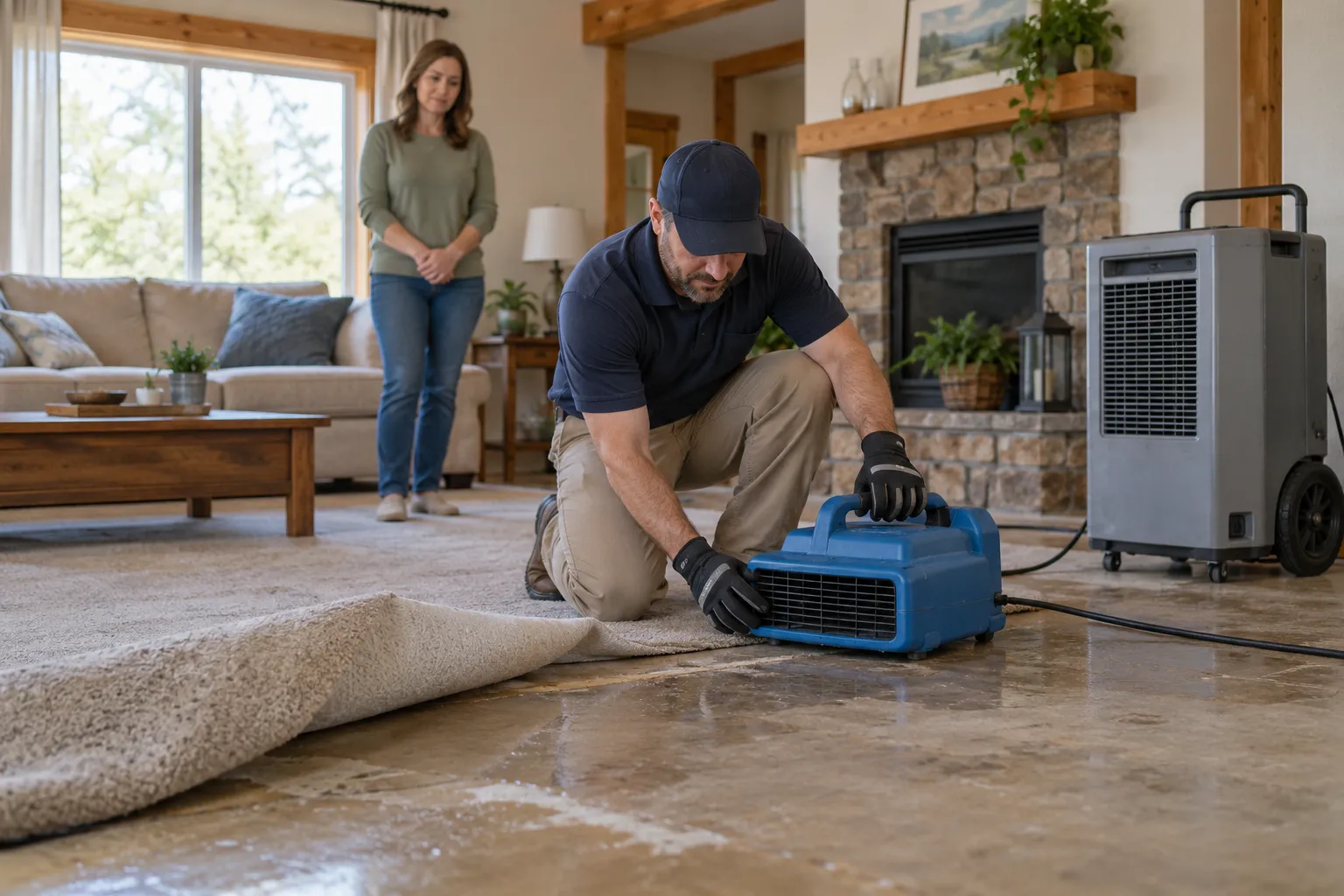
Finding water on your floor is scary. You may not know who to ask or what to do first. Water extraction removes the standing water. Structural drying then pulls the hidden moisture out of floors, walls and framing.
Charlotteaids Restoration is a referral service. We do not do the work ourselves. We help you understand your options, then connect you with an independent provider in our network who serves Indianapolis and the Greater Indianapolis area. Providers set their own schedules and prices, so availability varies. Calm, then call. Learn the steps on this page first, so you can talk to a provider with a clear head and plan the work around your family's routine.
It is normal to feel rattled. A wet home is a lot to take in. The good news is that the path forward has a clear order. First the water comes out. Then the building dries. Knowing that order makes every call and decision easier.
Before you worry about the floor, think about safety. Water and electricity do not mix. If water is near outlets, cords or a breaker panel, stay out of the room and do not touch them. Turn off power only if you can reach the panel while standing on dry ground. If you are unsure, step back and ask a licensed electrician or the provider for advice.
Also look at where the water came from. A burst pipe, a failed sump pump, a storm and a backed-up drain all lead to different next steps.
Water does not stay where it lands. It soaks into drywall, wicks up walls and slips under flooring. Wood can swell. Paint can bubble. Damp spots can start to grow mold in a couple of days when the air is warm and humid.
Many providers can respond quickly, but availability varies. That is why it helps to ask about timing early.
Extraction means taking out the liquid water. Providers use pumps for deeper water and powerful wet vacuums for floors, carpet and tile. They may use a hand tool to lift water from low spots. If the water is only a thin layer, a wet vacuum may do most of the job.
Pumps move a lot of water fast. Vacuums handle the thin layer that is left. Most jobs use both.
A provider may lift carpet to reach the pad underneath. Pad often holds water like a sponge and is sometimes replaced. Carpet itself can sometimes be dried and saved. It depends on how long it stayed wet and what kind of water it was.
Providers sort water by how clean it is. Water from a supply line is usually the cleanest. Water from a storm, a sewer backup or a flooded yard may carry germs and dirt. That kind of water often means more cleaning, and more materials may need to be removed. Ask the provider which kind you have and what it means for the plan.
Once the puddles are gone, the building is still wet inside. Structural drying deals with that moisture you cannot see.
Air movers push dry air across wet surfaces. Dehumidifiers pull the moisture out of the air so it can leave the building. The two work together, and the equipment hums in the background while life goes on.
Providers use moisture meters to check wood, drywall and concrete. Some also use thermal cameras to spot damp areas behind walls. Readings are taken again each visit, so you can see the numbers drop.
Many jobs take a few days. Larger or deeper soaking can take longer. Thick framing, concrete and cold, damp weather slow things down. Humid summers can too. The provider should explain the target and tell you when they expect to reach it.
Drying equipment takes up space and makes noise. If you have kids, pets or work-from-home hours, say so up front. Ask which rooms the equipment will sit in, what visit times are possible and how many visits to expect. Many providers can plan around school runs and work calls.
A few simple steps can help. Stop the source of water if you safely can. Move small items, rugs and electronics to a dry spot. Lift furniture off wet carpet, or place foil or blocks under the legs. Open closet doors and cabinet doors to let air in.
Take photos and short videos of the damage before anything moves. These can help later if you decide to file an insurance claim.
Skip the household vacuum on wet floors. It is not made for water. Avoid walking through deep water, and keep kids and pets away. Do not turn on ceiling fixtures under a sagging, wet ceiling.
Some policies may cover sudden damage, such as a burst pipe, but flooding from outside often needs separate coverage. Check your policy. Providers can often help document damage for a claim. Keep your receipts and notes in one folder.
A short list helps you compare your options. Consider asking:
We do not do the work. We explain the options, then connect you with an independent provider in our network. You stay in charge of every choice. Options before action.
Make the area safe. Take photos. Request a callback to check provider availability, or request an estimate with no obligation. Then ask your questions and choose the plan that fits your home and your week.
Pumps and wet vacuums take liquid water out of rooms, from a thin film to several inches.
Meters and thermal cameras help find damp spots inside walls and floors.
Equipment is set up to pull moisture from wood, drywall and air until readings drop.
Providers can track moisture levels at each visit and help document damage for a claim.
Prices vary a lot by job size, water type and how long things stayed wet. These are typical U.S. ranges only. Always get a written quote before work starts.
| Item | Typical range | Notes |
|---|---|---|
| Small water extraction (one room) | $300 – $1,000 | Thin water, quick access |
| Larger extraction (several rooms) | $1,000 – $4,000 | Depends on depth and area |
| Structural drying equipment (per job) | $800 – $3,500 | Often priced by days and equipment |
| Moisture mapping and monitoring | $100 – $500 | May be included in the quote |
| Carpet pad removal and disposal | $200 – $1,000 | Needed if pad stays wet |
| Contaminated water cleanup add-on | $1,500 – $7,000 | More cleaning and removal |
Stay away from water near outlets, stop the source if safe, and take photos.
Request a callback or request an estimate to learn your options.
A provider pumps and vacuums out standing water and checks what got wet.
Equipment dries the structure, and meter readings show when it is ready.
We explain your choices and likely steps first, so you decide with a clear head.
We connect you with independent providers who serve Indianapolis and nearby areas.
Simple words, honest limits, and no pressure to decide before you are ready.
Ask providers to plan visits around school, work and family routines.
Questions about a wet home? Request a callback to check provider availability, or send a request and a local provider in our network will follow up.
Many jobs take a few days, but it can be longer. Deep soaking, thick framing, concrete and damp weather all slow drying. Ask the provider for a target and how they will measure it.
For a small, clean spill, household fans can help. For larger leaks, moisture often hides inside walls and floors, where home fans cannot reach. A provider can check with meters before you close anything up.
Some policies may cover sudden damage, like a burst pipe, but outside flooding often needs separate coverage. Check your policy, take photos, and ask the provider to help document the damage for a claim.
Questions about a wet home? Request a callback to check provider availability, or send a request and a local provider in our network will follow up.
No obligation