Need water damage restoration in Indianapolis?
Questions about a wet home? Request a callback to check provider availability, or send a request and a local provider in our network will follow up.
No obligation
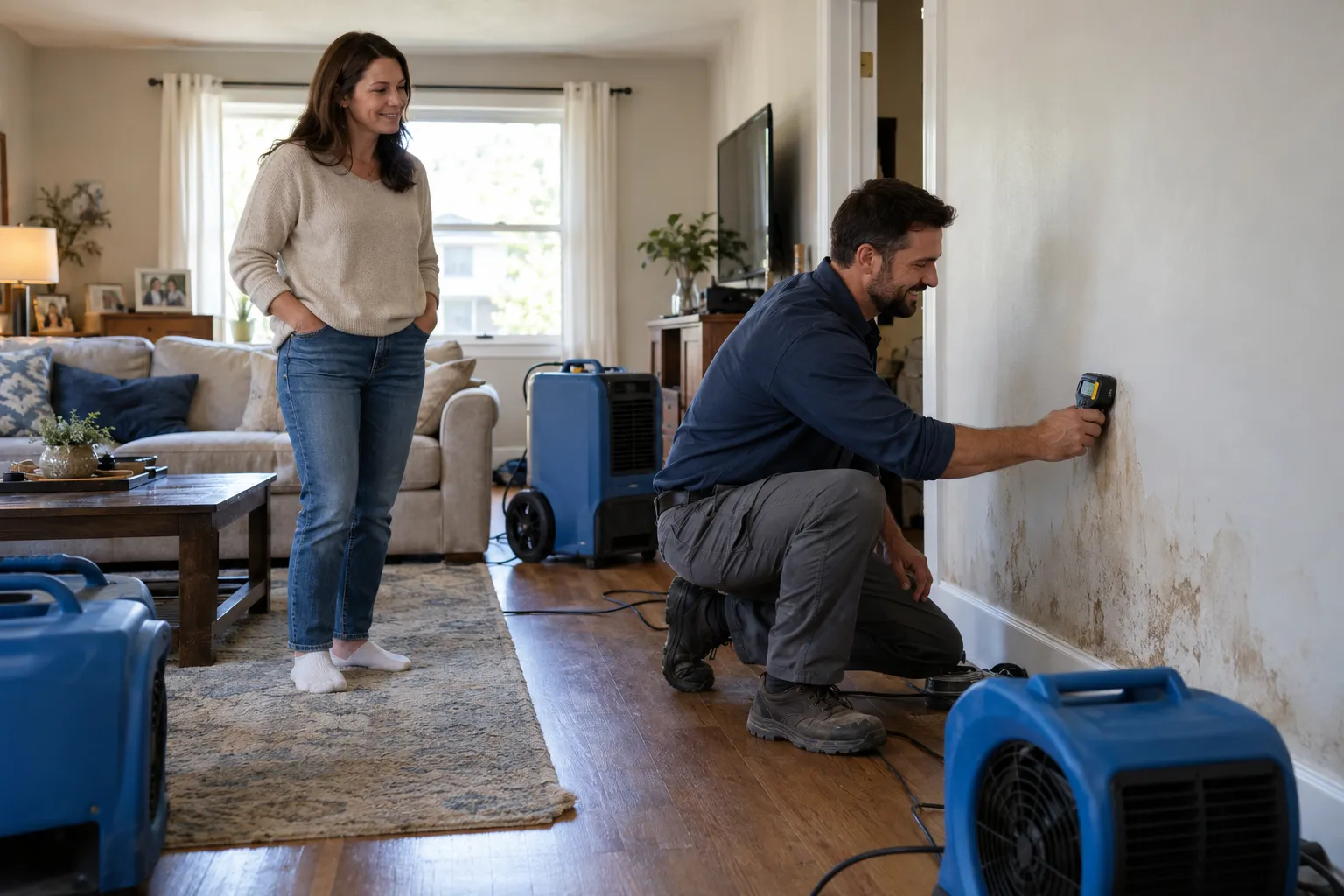
Finding water where it should not be is upsetting. A burst pipe, a failed sump pump, a roof hit by hail or a spring flood can leave you unsure where to begin. Take a breath. You have options, and you do not need to decide everything at once.
Charlotteaids Restoration is a referral service. We do not do the work ourselves. We explain how restoration usually goes, then connect you with an independent provider in our network who serves Indianapolis and the Greater Indianapolis area. Many providers can respond quickly, though availability varies. This page walks you through what restoration covers, what affects the price, and how to choose with a clear head. Calm, then call.
Seeing water on your floor or ceiling is scary. That feeling is normal. The good news is that most wet homes follow a clear path, and you can learn it in a few minutes.
This page shows the likely steps from the most urgent to the least. When you are ready, you can talk to a local provider about emergency water damage repair and a plan that fits your home.
A few simple moves can protect your family and your belongings. Only do what feels safe.
If you smell gas or see sparks, leave the house and contact the proper emergency services first.
Water spreads. It soaks into drywall, flooring and the wood behind them. Within a day or two, damp spaces can begin to grow mold. Warm, humid summers make this move faster.
Acting early usually means less material to replace and a smaller project. Request a callback to check provider availability in your area.
Restoration is more than mopping up. A provider usually looks at the whole path the water took. The work often includes these parts:
Not every job needs every step. A small leak may only need drying. A larger loss may need rebuilding too.
Providers sort water by how clean it is. This changes what can be kept and what must go.
This comes from a broken supply line or a leaking tap. It is the easiest to handle, but it can turn worse if left alone.
This comes from a washer, a dishwasher or a sink drain. It carries some germs and soap. Porous items often need careful cleaning or removal.
This includes sewage and river or storm flooding. It can carry serious germs. Keep children and pets away, and expect more removal and cleaning.
Most homeowners choose from three paths. Knowing them helps you ask better questions.
A provider can tell you which path fits after seeing the damage. Ask for the plan in writing.
Some policies may cover sudden damage, such as a pipe that splits during a deep cold snap. Slow leaks and flood events are often treated differently. Check your policy, or ask your agent before you decide.
Providers can often help document damage for a claim. Photos, moisture readings and a list of affected items all help. Keep your receipts, too.
You still have school runs, work and meals to manage. A good provider will plan around that. Ask these questions up front:
Clear answers keep surprises low. You can then set up a simple plan for kids, pets and meals.
Take a little time to compare. Look for a provider who explains things plainly and does not rush you.
Providers in our network are independent businesses. Charlotteaids Restoration does not do the work or set their prices.
After drying, the provider checks moisture levels again. When the readings look right, repairs can begin. That may mean new drywall, paint, flooring or trim.
Most homes in the Greater Indianapolis area are older frame houses, bungalows and ranches with full basements. Older materials may need extra care. Ask the provider to point out anything unusual they find.
You send a request. Charlotteaids Restoration explains your options and connects you with an independent provider in our network. You then talk to the provider directly and decide what to do. There is no obligation.
Request a callback to check provider availability, or send the estimate request when you are ready.
Pumps and wet vacuums pull standing water out of rooms so drying can start on a clear surface.
Fans and dehumidifiers pull moisture from walls, floors and hidden gaps.
Affected surfaces are cleaned to match the type of water, from clean supply water to storm flooding.
When materials cannot be saved, providers can replace drywall, flooring and trim to finish the job.
Prices vary a lot by home, water type and how far the water spread. These are typical U.S. ranges only. Always ask for a written quote before work begins.
| Item | Typical range | Notes |
|---|---|---|
| Small leak, one room dried | $500 – $2,500 | Clean water, caught early |
| Standing water removal | $300 – $1,500 | Depends on depth and area |
| Structural drying (equipment days) | $1,000 – $4,000 | Based on rooms and days of drying |
| Cleaning and sanitizing | $500 – $3,000 | Higher for gray or black water |
| Drywall and flooring replacement | $1,500 – $7,500 | Depends on materials and size |
| Larger multi-room loss | $5,000 – $20,000+ | Often includes rebuild work |
Turn off the water source if you can, avoid wet electrics and keep family clear.
Take photos and videos, and list wet items for your records.
Request a callback or send a request, and learn the likely paths.
Review the scope and quote in writing, then agree on a plan.
We explain the likely paths first, so you can choose before anyone starts any work.
Independent providers in our network serve homes like yours across the area.
Plain words and honest limits help you decide with a clear head.
Ask providers to plan around school, work and daily family routines.
Questions about a wet home? Request a callback to check provider availability, or send a request and a local provider in our network will follow up.
It usually includes removing standing water, drying the structure, cleaning affected areas, and removing materials that cannot be saved. Rebuilding and repairs may follow once everything is dry.
As soon as it is safe. Mold can begin to grow within a day or two, so early action often limits the damage. Many providers can respond quickly, but availability varies.
Some policies may cover sudden damage, such as a burst pipe. Flooding and slow leaks are often treated differently, so check your policy and ask your agent.
Questions about a wet home? Request a callback to check provider availability, or send a request and a local provider in our network will follow up.
No obligation